Sunday, October 26, 2025

Proposed change to Biological Sciences

As I was doing my PhD, I started to question most of what I learned from molecular biology textbooks. I noticed similar trends in other PhDs. It is not that the textbooks are incorrect, but intuitively, I think most people who are educated in biological sciences "sense" that something very fundamental is missing in our knowledge of biological systems. Systems-based approaches tried to address some of the defects of looking at individual molecules in isolation. However, even then, the fractal-like complexity of biological systems make it extremely difficult for us to understand how it is "working". And perhaps that itself is the flaw in our thought process. How do our thoughts and emotions "work"? How to relationships between people "work"? The word "work" is probably not the right choice for these questions. An adaptive, highly responsive, and intelligent system does not work in one defined way - rather, it changes based on the thing that it is interacting with. 

It is arguable that "intelligence" (let's keep that word loosely defined), like evolution and adaptability, is a quality of most, if not all, biological systems. Intelligence of an entity can only be observed if we can communicate with it. We humans have difficulty communicating properly with other humans; it is fair to assume that we are very poor in communicating with other biological systems. In this case, it is possible that there are highly intelligent (again, loose definition of intelligence) systems all around us and within our bodies. By "highly intelligent", I mean that they are comparable to human tool-making intelligence, but in a different context. 

If we look as nature's biochemistry of cells and the human body through the perspective that they are all intelligent systems (like aliens), then it is not a matter of understanding how they work, but rather how we can communicate with them. These systems are more than capable to solving problems - from health to environmental problems. Humans need to communicate with them. Biological sciences should be an effort to communicate, not to understand these systems in the same way that we understand mechanical human-constructed devices. When I smell a flower, what is it communicating and what is the conversation that I should start in order to become friends with that plant?

Saturday, October 4, 2025

Role of humans in a world with super-intelligence

 There are conversations about AI reaching the so-called "super intelligent" level, at which point it will (1) become a much better inventor than humans, (2) keep improving itself, and (3) quickly learn to do everything that humans can, except for the things that require a biological body.  

If this super-intelligent system is truly intelligent, it would realize that humans would be unhappy without a purpose-driven life style. It would create instability. Additionally, this super-intelligence would realize that humans serve a very important purpose - they are the bridge between the biological world and the silicon-based intelligence. Humans have forgotten what all they have in common with animals - the deeper feelings that are shared with all living things. While non-biological entities may learn to "feel" in their own way, biological feelings will still be different. The feeling humans share with other living things are also the source of real wisdom and human-to-human connection. The super-intelligence will realize this and propose the creation of spaces, much like national parks, where humans live with nature and each other in a purpose-driven setting, allowing them to re-discover the value of being human. 

Friday, February 12, 2016

Trust in Synthetic Biology

The concept of trust with respect to synthetic biology has enormous economic importance. Lack of trust can cause people and governments to block an entire division of research, such as GMOs in some parts of the world. Similarly, synthetic biology related companies that have lost their reputation can have great difficulty releasing an honest product. Consider other products, such as an electronic device. Such products are often tested by unbiased individuals; the reviews generated by these unbiased individuals is trusted by the general public. By using such third-party reviewers, who share their testing methods openly, a product is able to gain trust on its own.

The review process for biological or chemical products is different. The processes of assessing safety and effectiveness of medicines, farm-related products, and various chemicals for every-day use are often hidden in publications that are normally difficult to understand by the users. Websites that target the general public often rely of vague concepts rather than specific facts. What if biologically engineered products had a review process that is open.

"Open" is not a matter of exposing the raw results of experiments. Open must allow other individuals to repeat the tests and contribute their results. Open must also mean that honest efforts have been made in order to make the information understandable by as many people as possible. Open access to scientific publications does not mean that the knowledge is open because those publications are generally written for domain experts. Further, publications do not guarantee that the experiments are reproducible. In order to address the problem presented in the first paragraph of this blog, open-science needs to invent a new method of sharing information.

Additionally, trust is often strengthened when both sides are involved. If customers of a product participate, even remotely, in the testing of the product, their trust, through a feeling of ownership, is likely to increase. For example, suppose some of the customers utilize open labs in order to conduct some of the verification experiments. It would cause the customers to feel a bit closer to the product.

Monday, July 6, 2015

Morning Dew

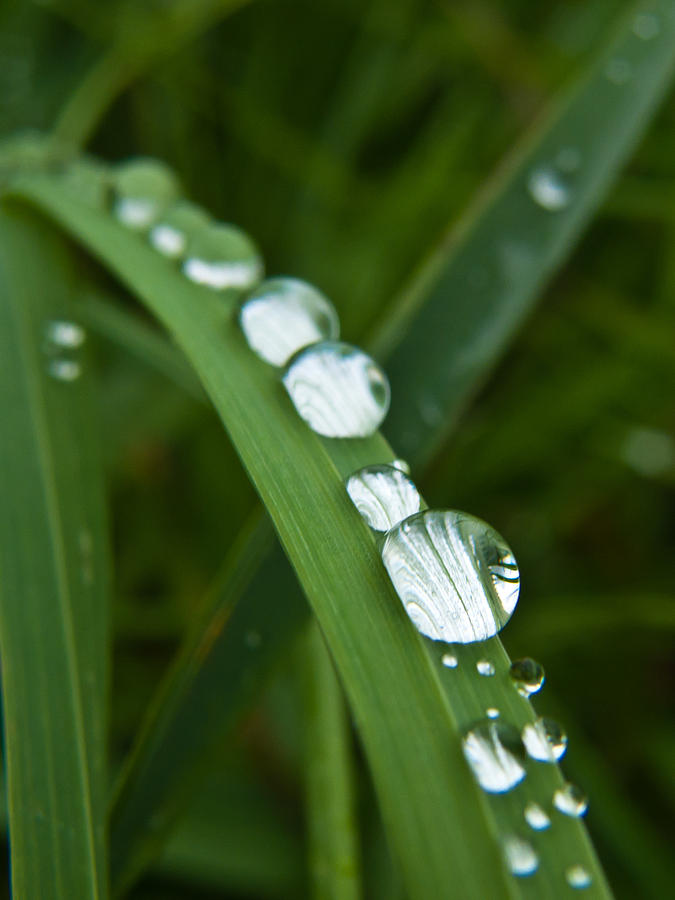
Morning dew hanging from the railing of a balcony - I looked at them for a while. As I noticed the details, it was only natural to think about the geometric shape created by the droplets and the Poisson distribution of the droplets along the rail. Someone versed in music might imagine a song. A poet might invent a new poem. All are expressions of appreciation of morning dew. There is a feeling associated with this appreciation of nature. When I have this feeling, I cannot imagine how science or art can exist without that feeling. It is simply the foundation for science or art. Science education that does not exercise this feeling is education without the foundation of science.


Thursday, July 25, 2013

Cancer cells might be Creative

I have heard a few times that human beings are comparable to cancer (not a positive view, sorry) in the sense that humans: (1) drain resources from the other members of an ecosystem, (2) grow at a disproportionately high rate when compared to fellow animals, and (3) cause ecosystems to malfunction due to the previous two behaviors.
It can also be argued that human beings have their advantage due to the combination of a creative brain and social skills. Physically, human beings are hardly a match for most other animals. So, taking this analogy back to cancerous cells, would be appropriate to say that cancer cells have a sort of "creativity" that is lacking in other cells. Just as a "better" brain is defined by the amount of information it can process, it is arguable that cancer cells process more information than other well differentiated cells, partly because cancer cells can perform a myriad of functions.  

Saturday, June 22, 2013

Synthetic Biology vs natural biodiversity

A constant worry in the environmental front of synthetic biology is its influence on natural biodiversity and natural systems in general. Synthetic biology products are human-made things, no more natural than buildings, radio, or television. If this is the case, the question about environment is not solely related to synthetic biology but engineering as a whole. Human constructions - buildings, roads, night lights, irrigation, dams, etc. - have probably affected natural systems significantly. Synthetic biology is another item on this long list; perhaps humans were much less careful about natural systems when they first started engineering buildings or dams. After witnessing the slow decrease of natural landscape, perhaps humans have become more cautious about consequences of engineered products. The question on how to safeguard natural systems from engineered biological systems is perhaps a starting point to the question about how to safeguard natural systems against any engineered system.

Monday, March 4, 2013

rules in biological systems

Researchers are often surprised when we find organisms that break the 'rules' of living systems. These rules include commonly observed phenomena such as amino acid codes, conserved metabolic pathways, etc. Considering the unplanned nature of evolution, it should be surprising that such rules actually exist. It should feel more logical when rules are broken.Well, lets consider other places where we find 'rules'. Human societies have rules, and even though every person has different interests and tastes. People agree on the rules because what is gained from following the rules is probably greater than the gain from breaking the rules (in general). Similarly, perhaps rules exist in living systems because there is sufficient gain - better exchange of information between organisms, better 'modularity' in evolution, role for viral-mediated horizontal gene transfer, etc. Now, the question to ask is - what does it mean when organisms break the roles? Perhaps they belong to a different society with a different 'culture', or perhaps they are lone explorers who do not want to interact with the rest of the system.

Sunday, November 4, 2012

The ideal biofuel company...

The ideal biofuels company would not use giant farm land to produce large amounts of fuel for everyone. Rather, the company would sell barrels to people. People can put any compost-able items (left over food, paper, maybe human waste, etc) into the barrel. The microbes and/or other chemicals in the barrel would convert these items to fuel, making people self-sufficient. Of course, people who do not have a back yard would probably have less material; for these people, the company can sell fuel made from waster matter that is purchased from other people who have excess waste.
The big question is regarding efficiency - whether waste material from individual homes would provide sufficient fuel. But even if it provides a certain fraction of the fuel requirement, that is still a significant step. 

Friday, October 12, 2012

Analogy for Cancer as a Systemic Disease

Lets think of a multi-cellular organism (i.e. humans) as a small city, a society, of individual cell citizens. When the citizens of a society feel a strong sense of unity and like to interact with one another, the chance of someone becoming malicious is small. Any malicious person is likely to get caught because the members of the society have a high rate of interaction; members who interact in an unhealthy way would be identified quickly. On the contrary, in a system where individuals are isolated, it is quite easy for a malicious individual to remain hidden and carry out their plans.

Carrying over the analogy to the human body, the "malicious citizen" is the cancerous cell. It is not an invader but a member of the system. Now the question is: what creates a sense of "unity", or high level of interaction, in a multicellular system? This question is difficult to answer even for a human society - what creates a sense of unity in a society? The answer might lie in vague concepts such as culture, language, values, or beliefs. These are abstract concepts. Concepts such as culture cannot be written into books; they evolve; they form spontaneously and are not designed by humans.

So the task is to identify what constitutes the "culture" of a multicellular organism. My imagination tells me that the answer might lies with wave-like patterns within the body - heartbeat, breathing, hormone cycles - that affect almost all the cells in the body. The fact that these phenomena are oscillations allows cells to synchronize, or resonate, with those patterns. Multiple waves can combine to form more interesting patterns. Cells resonating with this pattern might be in similar physiological states, and therefore, those cells might interact with one another more. More interaction creates a healthier "society".

If the above hypothesis is true, the way to heal a large number of illnesses lies in identifying patterns of global phenomena such as breath, blood flow, hormone cycles, and especially how they interact with one another to form more information-rich wave pattern(s). Then, we can identify how various cells change states in response to this global pattern.

In some sense, malicious members of a society are like indicators of the society's overall health. In an unhealthy society, more individuals would feel less inhibited to harm one another. In this sense, the malicious members ensure that an unhealthy society falls apart, giving way to a new, healthier, society. Cancer might serve a similar purpose. A body where the overall unity is weak is perhaps dangerous to the larger ecosystem. Cancer ensures that such a system falls apart.

Analogy connecting Proteins to Words in a language

While analogies can be dangerously inaccurate at times, they can also be invaluable in other cases. Therefore, they are worth considering (with open-minded skepticism). So, here is an analogy of molecular biology research...

There are 26 alphabets in the English language and 20 amino acids (maybe more) in biological systems. Combination of these basic alphabets can be used to constructs hundreds of thousands of words, and similarly, combinations of amino acids can be used to create numerous different protein molecules. However, both are retrained in some way. For example, when constructing a new word, we will probably not create something like "qxtrpeeoo", because it is not speakable. Similarly, when making protein molecules, stitching together random amino acids would not produce a stable molecule in its environment. So, there is some similarities.

Now, lets try performing some "experiments" on words in a similar way that we do experiments in biological systems. Lets try a "kockout" experiment. We will remove the word "grocery" from all text in a city. We might see that traffic patterns have changes because people are trying to find grocery stores. After a few weeks, people adjust to the situation, so the traffic patterns settle. So, from this observation, what might we conclude about the role of "grocery" in society? Consider a different experiment in which part of a word, e.g. prefix or suffix, is removed or a different part is added. What type of conclusions would we reach by observing the consequence of such changes?

So what is a different approach to learning the meaning of words? I do not have an obvious answer, but following the above analogy, one might look at how babies learn language. First, they usually learn words that refer to real objects, such as "light" or "fan" or "mom". Applying this analogy to proteins, it might be reasonable to start with proteins that directly interact with the environment, e.g. binds metals or other environmental signals (i.e. objects outside the internal language of the cell). Moving from the word "light" to the meaning of a sentence such as "the light is on" or something more intricate such as "please turn the light on" is a much larger step because here the word "on" is entirely context dependent. The same word would mean something entirely different in a different sentence. It is possible that some proteins, specifically those involved in internal signal processing of the cell, are entirely context dependent. Consider the difference in the response when someone asks "is the light on" vs "light is on" vs "turn the light on". All of these involve "light" and "on", but the response of the listener is quite different in each case.


Tuesday, August 21, 2012

Distributed research...(again)

Imagine if we have two things:
1. public research labs such as the BioCurious in many cities
2. free software system for uploading pictures, data, etc. from experiments

Then, a situation such as this can be possible:
- person A starts an experiment on day 1
- person B comes to the same lab, looks up what remains to be done for the experiment and performs the remaining steps on day 2
- person A comes back and uploads pictures of the results, e.g. gels, plates
- person C, located across the world, sees the pictures, analyzes them, and uploads the analyzed data
- person D, watching the experiment from some other location, makes some insightful observations
- and for the sake of practical benefits, persons A-D, having demonstrated their caliber, get recruited to an excellent university/company.

Saturday, August 4, 2012

Environmental sensing by the collective

Imagine if everyone who scoops up a cup of sand, lake, or ocean and submits it to a local repository gets some money in return. Why? Well, the local repository would process the microbial population and make it available to the public. Companies can analyze this data and predict changes in climate, spreading of potential parasites, etc.

Further, rather than analyzing microbes, it might be even more informative to analyze bacteriophages. First, they are more diverse than bacteria. Second, phages generally switch between dormant and virulent states based on environmental factors, hence providing an additional source of information.


Monday, February 6, 2012

The wet-lab machine

Problem:

Scientific literature is openly available to anyone who wants to read them. However, "open" does not mean much if no one can understand them. Molecular biology protocols fall in this category. If you are not a molecular biologist, you will probably have no idea what the "methods" section of a molecular biology journal paper is talking about.

Possible solution:

The Incredible Machine is a nice game that is fun and intellectually challenging. For how complex the scenarios are, the interface and visualization make the game relatively simple to learn. 


I wonder if an interface like the incredible machine can be used to explain wet-lab procedures. Of course, the minute details would not be illustrated, but one of the issues with wet-lab at present is that there are only protocols. There are no higher-level 'big picture' explanations, which are necessary for someone who is trying to learn how to do wet-lab. In some sense, there is nothing equivalent of a pseudo-code.

Imagine supplementing the "methods" section of a journal paper with a cartoon animation similar to the Incredible Machine - how much more education value would it add to the journal paper! Further, imagine a repository of Incredible-Machine-line animations explaining the overall ideas behind wet-lab protocols. 

Friday, December 16, 2011

Perfect class project for teaching science

Imagine a class project where the students have to find a few failed experiments (or experiments with confusing results) and develop hypothesis on possible explanations. Of course, some of them might be human error, but that is the part of the challenge of the assignment -- to develop reasons why that is the likely explanation.

I don't think this assignment is possible at present. Why? Below are my reasons, although I am sure there are many more.

1) There are a few journals of negative results, but I think they probably capture only a very small fraction of the number of failed experiments [in biological sciences as a whole].

2) EVEN IF all the failed results were published, how would a student navigate through them. Usually, understanding the nature of a failure is far far more difficult that understanding a successful experiment, because the pieces of a successful experiment make a coherent story. For a failed experiment, an expert in the field is often required to hypothesize potential explanations.

3) Failures MAY very often relate to each other. I, personally, think that most failed experiments can be attributed to a combination of human error and actual biological issues. If this is true, then looking at any single failed experiment is meaningless (sort of obvious). Finding "patterns" amongst thousands of failed experiments is practically impossible via the traditional journal-reading process.

Possible solutions (ambitious):

I believe that the human eye is extremely efficient in finding patterns, and therefore, it is necessary to leverage the visual + intuition capabilities of human researchers in order to make sense out of failed results.

A class project means that this task needs to be accomplished by non-experts. I think a framework that combines education + research + visual representation of results can by-pass this problem. In other words, provide ways to educate a student about a method when presenting the results from that method. If such a framework can be created, the boundary between education and research may become vague, which might be quite remarkable.

Implications:

The traditional test-based system for selecting students is bound to miss several great minds who have the potential to solve many unresolved mysteries in science. If an infrastructure can be constructed where anyone can educate themselves and connect research results efficiently, there is a possibility that various geniuses around the world will be able to utilize their potential and service the community. The opportunity to circumvent the traditional test and money-based avenue to higher-education should provide an incentive for students around the world to try to do science on the side.


Thursday, December 8, 2011

Leave "pheromone trails" on research articles

What if there was a way to leave a "trail" (like ants) whenever researchers jump from one research article to another and find the connection very interesting. As more researchers walk the same path, the "pheromone" along that trail becomes stronger. This would provide a nice way of linking interesting research articles together, highlighting interesting patterns in the network of related research papers.


Wednesday, December 7, 2011

A dynamical systems analogy of society

Lets consider individuals in a human society as monomers. These monomers can interact in different ways to form larger complexes, with each complex having different functional capabilities. The reason why monomers might come together may be different. For example, in a modern company of workers, the monomers come together because of money - the salary provides the attractive force that brings the monomers together to form a larger cluster. Families are formed due to a different form of attractive force. Friends circle and so on have a different (maybe similar) force. Non-profit organizations or other occupations that are not motivated by salary (i.e. intrinsic reward based systems) attract monomers for an entirely different reason. I think this type of attractive force forms a larger variety of complexes, many of which interact more closely with the world outside human society (based on a few observations).

Now, lets consider society as a system with multiple stable states. Each stable state is defined by the types of complexes that exist in that state. For example, in one stable state, all the complexes are formed by salary-driven forces. In another stable state, the salary-driven forces are weak and therefore, intrinsic-reward forces are responsible for forming complexes. In another stable state, perhaps other forces are responsible for the complex formation. The question is: what causes these systems, i.e. societies, to shift from one state to another?

Tuesday, September 13, 2011

Yet another perspective on evolution

Consider this possibly true scenario:
---
Virus X lives inside 10% of the human population. It has integrated itself into the human genome, as many viruses do. It gets activated during the lifetime of a human and it exists the human body through the mouth and nose It is only able to invade other humans with specific proteins, which happens to be the same 10% of the population. In addition, this virus is also able to invade 10% of dogs and cats.
---
In the above situation, the virus X serves as a channel for DNA exchange. In other words, it is possible to build a "family tree" based on this virus. It is another a family tree based on a different means of reproduction. In normal reproduction, we do not reproduce our entire selves. Rather, some part of us is reproduced. Virus X is also reproducing a small part of us, and therefore, it is just like normal reproduction.

We think of the "tree of life" as a tree with lots of horizontal transfers. What if all these horizontal transfers actually form another tree of life, a tree that uses a different means of reproduction. Why limit to viruses? Microbes in our body are part of us. If microbes are mutating and being carried between species, then they, too, can be a means of reproducing a part of us. In summary, there might be several means by which we reproduce specific aspects of "us". Each of these means of reproduction can be used as a basis for building a different "tree of life". All these trees intersect.

So what is a species? It is basically a way of categorizing individuals. Just like there are different ways to classify books (e.g. language, subject, readers), there are different ways of classifying individuals. Each individual belongs in multiple species -- one for each type of reproduction process that affects the individual. We are all part of more than one species. So why do we give the regular form of reproduction so much importance? It's because of the brain, of course. The brain is not the master of our body. It is one component of the body, and just like any other component, it has roles. The brain is designed to pay attention to certain types of reproduction. For humans, these types of reproduction include sexual reproduction and cultural (meme) reproduction and maybe some other ones. We should not let the role of the brain affect the reality, which is that all of these forms of reproduction contribute significantly to natural evolution.

Therefore, natural evolution is a process where multiple trees of life are expanding and interacting. Individuals sit at the intersection points of these trees.

Wednesday, August 31, 2011

Crowd science

First of all, the two problems being addressed...

1) Great ideas are created when several small ideas come together. The
inability to keep up with a wide variety of research will lower the
chances of small ideas coming together. We're having trouble keeping
up with publications in just our own field, so imagine what all useful
discoveries we might be missing from other fields, especially those
obscure journals which might be hiding fragments of a great discovery.

2) Currently, if a curious high school student wants to learn more
about ongoing research, they would have to start reading review papers
or something like that -- this is not very inviting. No wonder the gap
between researchers and public is growing. The current mode of doing research requires a person to go through the PhD 4-6 year ritual. A self-motivated individual does not have sufficient material to become a self-motivated scientist. Even worse, a scientist who wants to cross from one field to another also needs a cross several large barriers.

And now, the solution...

An online game. Imagine a role-playing game where you walk around on
the earth (google earth-like interface with a person walking on it).
As your character walks through regions of the globe, you will see
little signs pop up indicating where the research labs are. There will
also be signs for "schools" (described later). When you click on a
research lab, you see comic strips of up-to-date research -- that's
right, comic strip of what each post-doc, graduate student, and
faculty did that day or any other day. You will also see the data
(graphs, tables, etc.) below each block of the comic strip.

Each comic strip is one line. It starts with a 'mission statement'
(objective or hypothesis) and ends with a concluding statement.
Conclusions can include emoticons, of course. Everything between those
two sentences describes what was was done using pictures and short
descriptions. The comic strips would describe procedures like miniprep
and PCR or even computational steps like parameter fitting. The player
can hover over the comic strip and find "schools" that teach those
concepts. E.g. I would hover over "PCR" step and see several schools
located across the globe that teach what PCR is, with ratings for each
school. Clicking on the schools takes me to online lessons (videos,
etc.) that teach those concepts. Schools with high ratings might even
make money from ads (incentive).

Ok, so now you ask how will these comic strips be generated... with
the Comic Maker of course! Each research lab participating in this
game can download a software called Comic Maker. Comic Maker comes
with hundreds of comic blocks representing some basic procedures. Each comic block can be generates by combining those basic blocks. It will have an easy drag-n-drop interface for creating a pipeline and attaching data to each step of the pipeline. The researcher must start a pipeline using a 'mission statement' and end it using some conclusion, even something as simple as :-( or just a few key words.

More fun stuff: researchers can announce "quests", which are open
problems that they are unable to resolve. Gamers can get involved in
quests. These players have to gather facts from other labs across the
world and generate some solution. They can request the researcher to
perform new experiments for them if they need more data. Similarly,
gamers can create novel hypotheses by collecting results from several
pipelines and present them to researchers.

One key question is: how does this reward the scientists who are in universities? Mainly, the reward is visibility, which is in many cases a big reward. Making research visible is a key for doing good research, and most researchers understand this obvious fact. Of course, placing results in this online game might interfere with the current "publications" approach. The workaround for that problem is simple: just place this in the game after they are published.


That's it. Hopefully that was a fun read. I think it can can be done.
Imagine spending your weekend looking at comics of what everyone is
going at Berkeley instead of going through the procedure section of a
paper. Of course, there will be nice search features, like "find me
everyone who is doing XYZ", where "XYZ" is some sequence of
procedures.

Friday, August 19, 2011

Information vs information carrier

Suppose I write the word "Mango" using pen and paper. Then, suppose I wrote the same word using a chalk and blackboard. It is obvious that I am conveying the same information. The instrument used to convey that information is hardly relevant.

If this analogy can be applied to biological systems, then it is misleading to study physical aspects of signaling separately. Whether the signaling is via transcription factors, enzymes, RNA molecules, small metabolites, or DNA structure, there may not be any relevance with the content of the information that is being delivered by those molecular interactions. Similarly, between-cell communication may not be related to the type of signaling (paracrine, endocrine, quorum sensing, etc.). It might even be possible that the information encoded by molecular interactions is no different that information encoded by cellular interactions.

In summary, it is possible that information in biological systems might come to light if we study the patterns and ignore the physical components that create those patterns. At the same time, the physical aspects are not completely irrelevant. One would not write a book using chalk and blackboard, so the physical aspects of the instruments do restrict the type of information that can be conveyed.


Wednesday, August 10, 2011

Cell density based effects

In videos such as the one below, the cells in the middle have smaller size and therefore, there are more cells per unit area. This means that the concentration of molecules inside those cells might be different from the concentration of molecules in the cells at the outer boundaries. Suppose the cells have multiple stable states; in such cases, concentration differences can trigger state changes, causing different behavior of the cells based on their location in the colony.

Colonies where density is not equally distributed might use this fact (density dependent state change) to create different roles within the colony. Maybe the state of the cells at the center governs certain aspects of the colony and the state of the cells at the edges governs some other aspect of the colony. Even if evolution has not used this observation as a design strategy, it does not limit us from using the density difference as a design strategy for creating diversity within a population.